Humans have two sets of teeth: deciduous starting eruption around 6 months with 20 total8 incisors, 4 canines, 8 molarsfor primary chewing until about age 12 when exfoliated, and permanent…
Digestion of proteins physiology involves not just enzymes but sophisticated regulation to match secretion to dietary intake, starting with the cephalic phase where sight or smell of food stimulates vagal…
Muscular arteries like femoral or radial distribute blood flow via thick tunica media of smooth muscle regulating resistance through vasoconstriction or dilation, elastic arteries like aorta buffer pulsatile flow with…
A lipid transport diagram focusing on chylomicrons shows how dietary fats move through the body after digestion. Large spherical particles are illustrated carrying triglycerides, cholesterol, phospholipids, and fat-soluble vitamins within…
The hepatic portal vein system is a unique venous network that collects nutrient-rich, deoxygenated blood from the gastrointestinal tract, pancreas, and spleen and delivers it directly to the liver for…
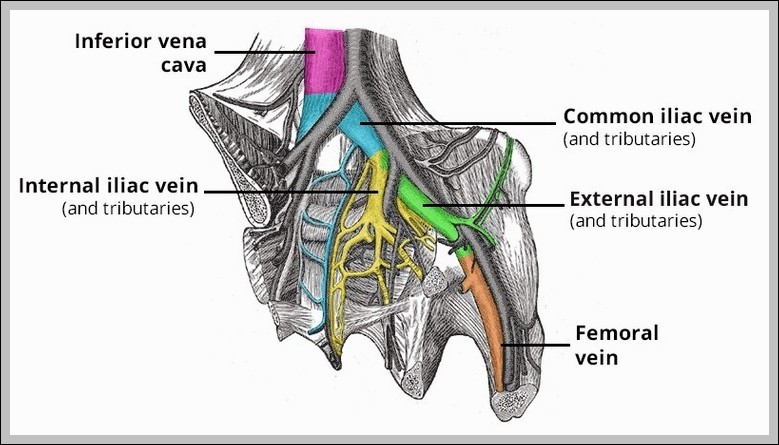
Venous blood from the body converges into two great veins: the superior and inferior vena cava. Head and neck veins drain into the brachiocephalic veins, which merge into the superior…
In vitro fertilization bypasses natural barriers by retrieving mature eggs from stimulated ovaries, fertilizing with sperm in labsometimes via ICSI injectionculturing embryos to blastocyst, then transferring to prepared uterus, with…
The common iliac arteries branch from abdominal aorta bifurcation at L4, each dividing into external iliac supplying lower limb via femoral and internal iliac feeding pelvis. Internal branches include superior…
The large intestine's histology is geared toward water absorption, electrolyte balance, and waste formation, with a mucosa lacking villi but featuring deep crypts of Lieberkühn lined by columnar absorptive cells…
The fetal circulatory system is beautifully adapted to bypass the lungs and liver while maximizing placental exchange. Blood leaves the fetus through two umbilical arteries branching from the iliac arteries,…
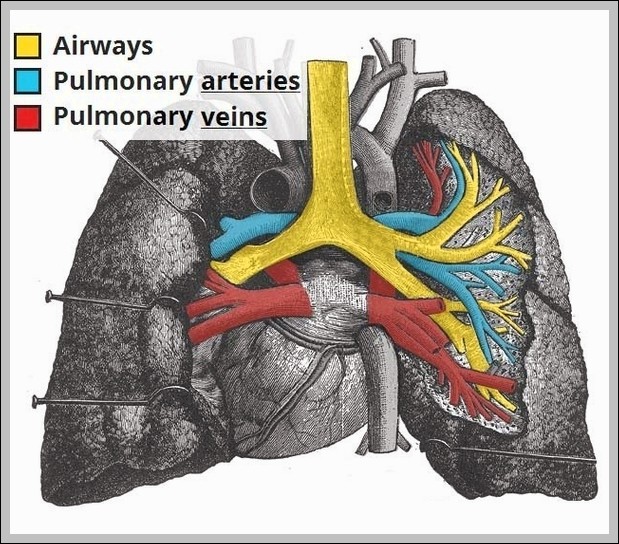
Structures of respiratory zone begin distal terminal bronchioles with occasional alveoli respiratory bronchioles more leading alveolar ducts fully walled sacs clusters sharing openings millions thin-walled pouches type I cells diffusion…
Major systemic arteries begin with ascending aorta giving coronaries, arch branching brachiocephalic, left common carotid, left subclavian, then descending thoracic supplying intercostals, abdominal continuing as celiac, mesenteric, renal, gonadal, iliacs,…
Implantation occurs about a week after fertilization when the blastocyst, having hatched from zona pellucida, adheres to endometrial lining primed by progesterone, with trophoblast cells invading to establish placental connections.…
The arterial supply to lower limbs forms a continuous chain with branches providing redundancy, starting with common femoral dividing into superficial femoral through adductor canal and profunda femoris laterally, then…
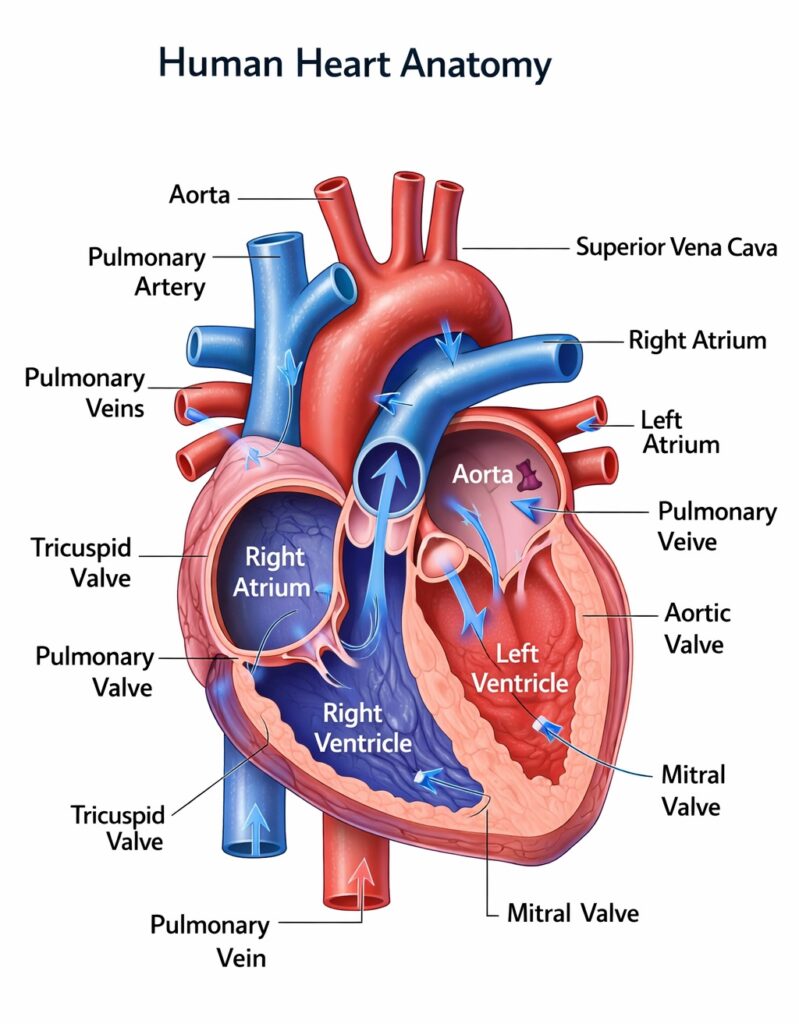
The heart's muscular wall, the myocardium, consists of specialized cardiac muscle cells arranged in spiral and circular bundles unique to each chamber. Atrial muscle is thinner and arranged in loops,…
A side-by-side vascular comparison highlights the structural differences between arteries and veins. Thick muscular walls, narrow lumens, and elastic layers are shown in arteries, while veins appear thinner with wider…
Stethoscope placement for heart sounds uses four standard sites: aortic second right intercostal sternal border high-pitched semilunar closures, pulmonic second left for same, tricuspid lower left sternal for right AV,…
An immune system interaction diagram illustrates how innate and adaptive responses work together. Early defenses such as macrophages and inflammation are shown activating and guiding lymphocytes. This cooperation explains faster…