Red blood cells, or erythrocytes, have a remarkably consistent lifespan of about 120 days as they circulate through the body delivering oxygen and picking up carbon dioxide. They originate in the red bone marrow from hematopoietic stem cells that differentiate into proerythroblasts, then pass through stages where the nucleus shrinks and is extruded, hemoglobin accumulates, and the cell flattens into its biconcave shape for flexibility and surface area. Once mature, erythrocytes lack a nucleus and organelles, so they cannot repair themselves and gradually wear out from mechanical stress in narrow capillaries and oxidative damage. Aging red cells become less deformable and display surface changes that macrophages in the spleen, liver, and bone marrow recognize, engulfing and breaking them down. Iron from hemoglobin is recycled, bilirubin from the heme heads to the liver for excretion in bile, and the globin chains are broken into amino acids. The body maintains balance by producing roughly 2 million new erythrocytes every second.
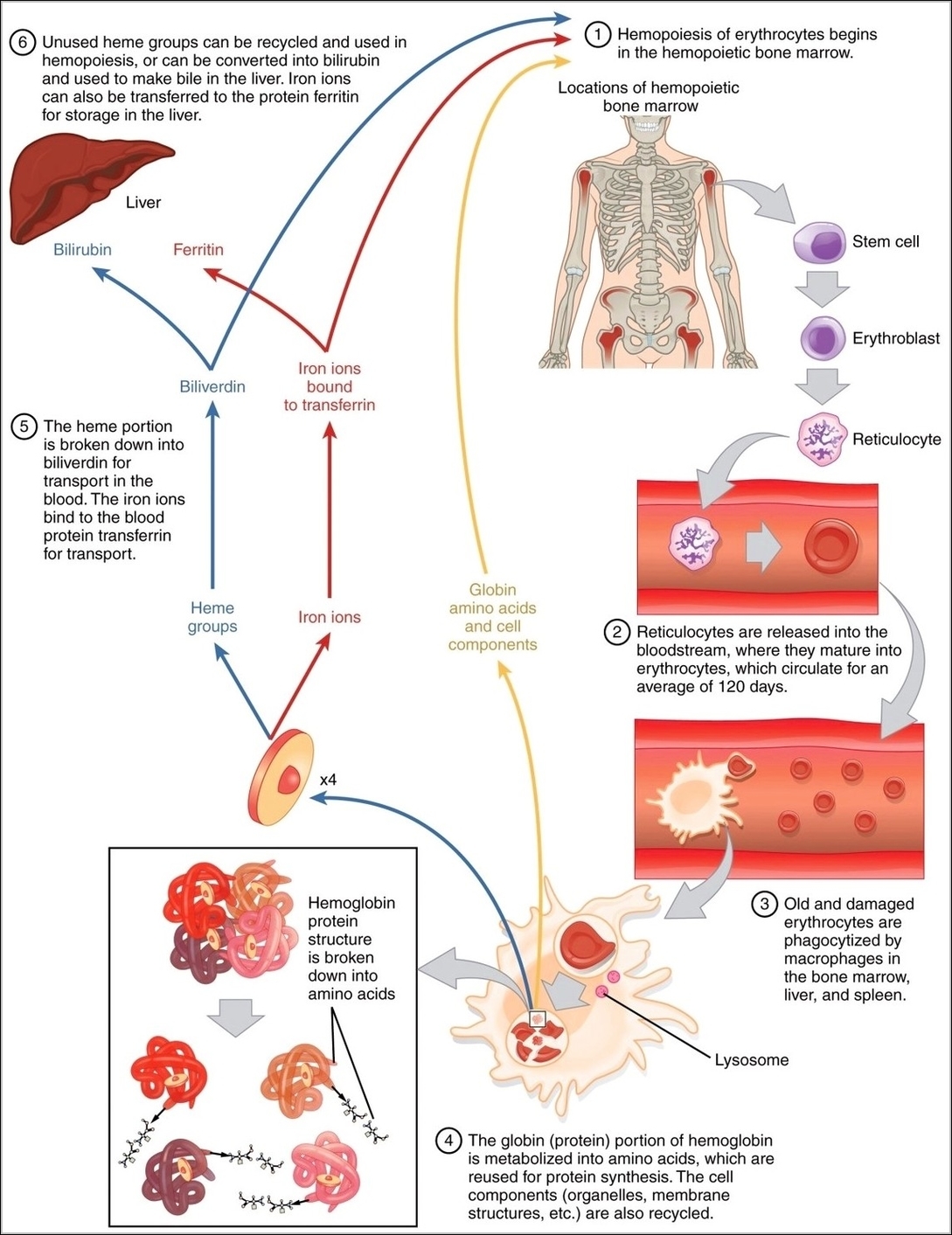
Erythrocyte Life Cycle
Posted inCell
Erythrocyte Life Cycle
Post navigation
Previous Post
 Spiral Ganglion Neurones Auditory Pathway Diagram
Next Post
Aorta