
Stomach Anatomy
The stomach is a muscular sac located in the upper left portion of the abdomen, playing a critical role in digestion. It develops from the foregut and connects the esophagus with the duodenum. The stomach lies between the esophagus and duodenum, primarily in the left upper quadrant. The junction between the esophagus and cardia is located at roughly the T11 vertebral level and just left of the midline.
Parts of the Stomach
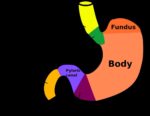
The stomach’s anatomy is complex; it consists of four parts:
1. Cardia: The area where the contents of the esophagus empty into the stomach.
2. Fundus: The upper portion of the stomach, which forms a bulge higher than the opening of the esophagus.
3. Body (Corpus): The main, central region of the stomach.
4. Pylorus: The lower part of the stomach that facilitates emptying the contents into the small intestine.
tomach Function
The stomach’s primary purpose is to digest food and send it to the small intestine. It has three main functions:
1. Temporarily store food.
2. Contract and relax to mix and break down food.
3. Produce enzymes and other specialized cells to digest food.
tomach’s Role in the Digestive System
The stomach is part of the gastrointestinal (GI) tract, a long tube that starts at your mouth and runs to your anus. Each part of your GI tract breaks down food and liquid and carries it through your body. During the digestive process, your body absorbs nutrients and water, then expels the waste products of digestion through your large intestine.
Blood Supply and Innervation
The stomach receives its blood supply mainly from the celiac trunk. Innervation is provided via the vagus nerves and the celiac plexus.
Microscopic Anatomy
The stomach wall is made up of several layers:
1. Mucosa: The innermost layer, which produces stomach acid and digestive enzymes.
2. Submucosa: Contains nerves, blood vessels, and lymph nodes.
3. Muscularis Externa: Responsible for the stomach’s mechanical breakdown of food and churning action.
4. Serosa: The outermost layer, which reduces friction between the stomach and surrounding organs.
In conclusion, the stomach is a complex organ with a critical role in the digestive process. Its structure and function are intricately linked, allowing it to efficiently break down food and pass it along to the next stages of digestion..