Depolarization in sinus rhythm refers to the orderly spread ??? of electrical impulses through the heart that drives a normal heartbeat, starting from the sinoatrial node, the natural pacemaker located in the right atrium, where specialized cells spontaneously generate action potentials. This impulse spreads rapidly across both atria via internodal pathways, causing atrial contraction to fill the ventricles, represented by the P wave on an ECG, then reaches the atrioventricular node where there’s a brief delay allowing complete ventricular filling before the signal blasts down the bundle of His, splitting into left and right bundle branches, and fanning out through Purkinje fibers to depolarize the ventricles from apex to base for efficient ejection. Sodium channels open, flipping membrane potential positive, followed by calcium influx for contraction, all resetting during repolarization; this precise conduction system ensures coordinated pumping at 60-100 beats per minute, and any disruption like blocks or ectopic foci can lead to arrhythmias, making it the foundation of healthy cardiac function.

Depolarization in Sinus Rhythm
Posted inMedical
Depolarization in Sinus Rhythm
Post navigation
Previous Post
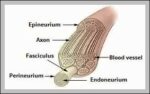 Connective Tissue Layers of a Neurone Diagram