The hepatic portal vein system is a unique venous network that collects nutrient-rich, deoxygenated blood from the gastrointestinal tract, pancreas, and spleen and delivers it directly to the liver for processing before entering general circulation. Capillaries in the gut absorb digested foodamino acids, glucose, vitaminsdraining into tributaries like the superior mesenteric vein for small intestine and inferior mesenteric for colon, while the splenic vein brings blood from spleen and pancreas via gastric veins. These merge into the portal vein, which branches into sinusoids where hepatocytes extract nutrients, detoxify drugs or alcohol, store glycogen, and produce bile. This setup allows the liver to regulate blood glucose, clear toxins, and metabolize before substances reach the heart via hepatic veins and inferior vena cava; portal hypertension from cirrhosis backs up flow, causing varices and ascites.
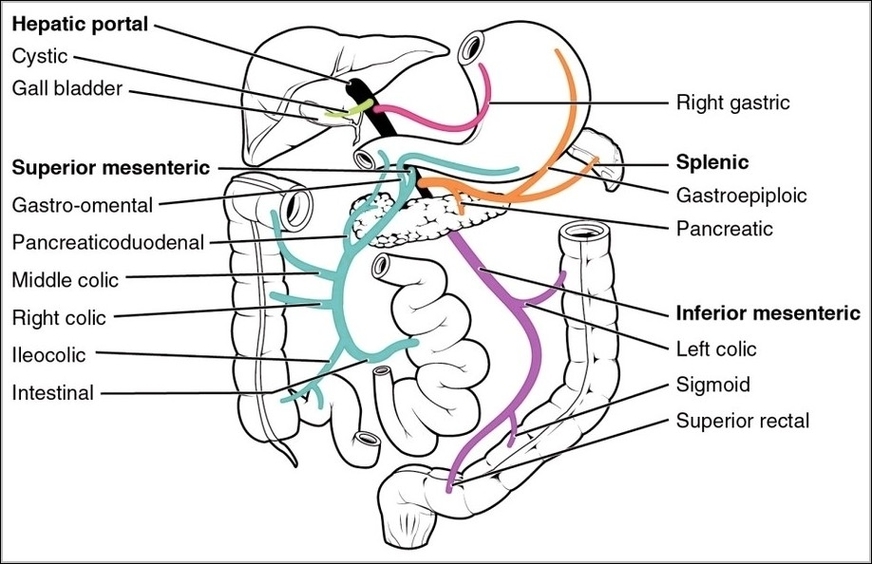
Hepatic Portal Vein System
Posted inOrgans
Hepatic Portal Vein System
Post navigation
Previous Post
 Vascular Homeostasis Flow Art