The stomach is a muscular, hollow organ in the gastrointestinal tract of humans and many other animals, including several invertebrates. It plays a vital role in the digestive system, involved in the gastric phase of digestion, following chewing. The stomach performs a chemical breakdown of food by means of enzymes and hydrochloric acid.
In humans and many other animals, the stomach is located between the esophagus and the small intestine. It is in the left upper quadrant of the abdominal cavity. The top of the stomach lies against the diaphragm. Lying behind the stomach is the pancreas. A large double fold of visceral peritoneum called the greater omentum hangs down from the greater curvature of the stomach.
The stomach secretes digestive enzymes and gastric acid to aid in food digestion. The pyloric sphincter controls the passage of partially digested food (chyme) from the stomach into the duodenum, where peristalsis takes over to move this through the rest of the intestines.
The stomach is surrounded by parasympathetic (stimulant) and sympathetic (inhibitor) plexuses (networks of blood vessels and nerves in the anterior gastric, posterior, superior and inferior, celiac and myenteric), which regulate both the secretory activity of the stomach and the motor (motion) activity of its muscles.
Because it is a distensible organ, it normally expands to hold about one litre of food. The stomach of a newborn human baby will only be able to retain about 30 millilitres. The maximum stomach volume in adults is between 2 and 4 litres.
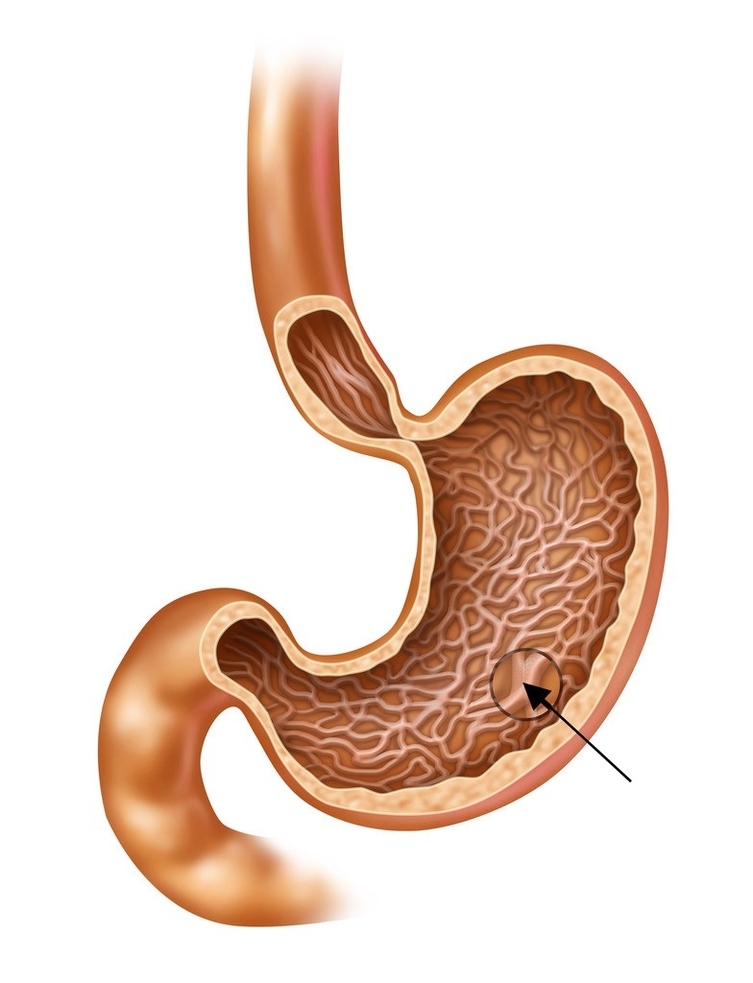
In classical anatomy, the human stomach is divided into four sections, beginning at the cardia. These four main sections are the cardia, fundus, body, and pyloric part. As the name implies, the cardia surrounds the cardiac orifice, which is the opening between the esophagus and the stomach. It is the first section that ingested food passes through, representing the inflow part.
The stomach develops from the foregut and connects the esophagus with the duodenum. Structurally, the stomach is J-shaped and forms a greater and lesser curvature and is divided grossly into regions: the cardia, fundus, body, and pylorus.
The stomach is located in the upper-left area of the abdomen below the liver and next to the spleen. Its main function is to store and break down the foods and liquids that we consume before those contents travel to other organs to be further digested..