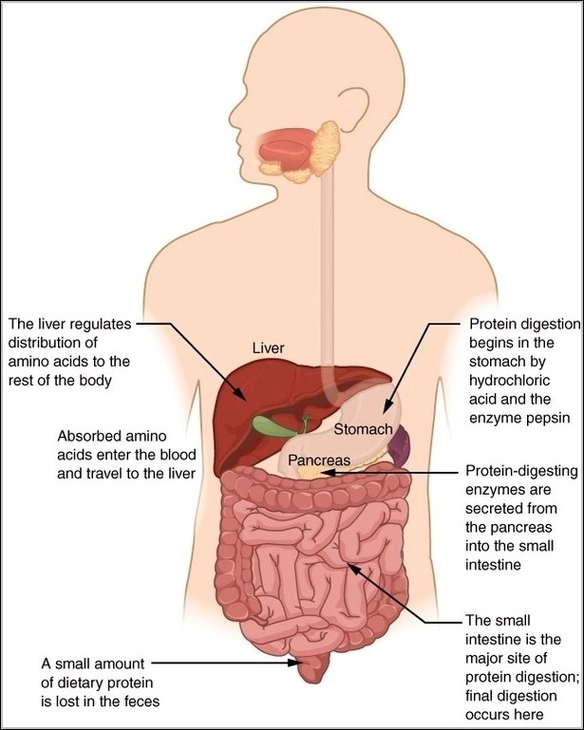
Digestion of proteins physiology involves not just enzymes but sophisticated regulation to match secretion to dietary intake, starting with the cephalic phase where sight or smell of food stimulates vagal nerves to prime gastric acid and pepsinogen release. In the gastric phase, proteins and distension trigger G cells to release gastrin, amplifying HCl and pepsin while intrinsic factor aids B12 absorption later; entering the intestine, acidic chyme and peptides stimulate S cells for secretin, which prompts pancreatic bicarbonate to neutralize acid, and I cells for cholecystokinin (CCK), which drives enzyme-rich pancreatic juice and gallbladder contraction. Feedback loops like enterogastric inhibition via neural reflexes and hormones slow gastric emptying if the duodenum is overwhelmed, ensuring optimal pH and enzyme availability; this hormonal and neural orchestration fine-tunes the process for maximal efficiency and minimal discomfort.
Digestion of Proteins Physiology
Posted inMedical
Digestion of Proteins Physiology
Post navigation
Previous Post
 Muscular and Elastic Artery Arteriole
Next Post
Permanent and Deciduous TeethN