Before birth, the fetus relies on unique circulatory shortcuts because its lungs are non-functional and it gets oxygen and nutrients from the placenta via the umbilical cord. Oxygen-rich blood enters through the umbilical vein, mostly bypassing the liver through the ductus venosus, then flows into the inferior vena cava to mix with deoxygenated blood returning from the lower body. In the right atrium, a flap called the foramen ovale directs much of this oxygenated stream directly into the left atrium, skipping the lungs. Blood that does enter the right ventricle is mostly shunted away from the collapsed pulmonary arteries through the ductus arteriosus into the aorta. After delivery, the first breath inflates the lungs, dropping pulmonary resistance and closing the foramen ovale, while falling placental flow and rising oxygen levels constrict the ductus arteriosus and venosus, transitioning to adult circulation within days.
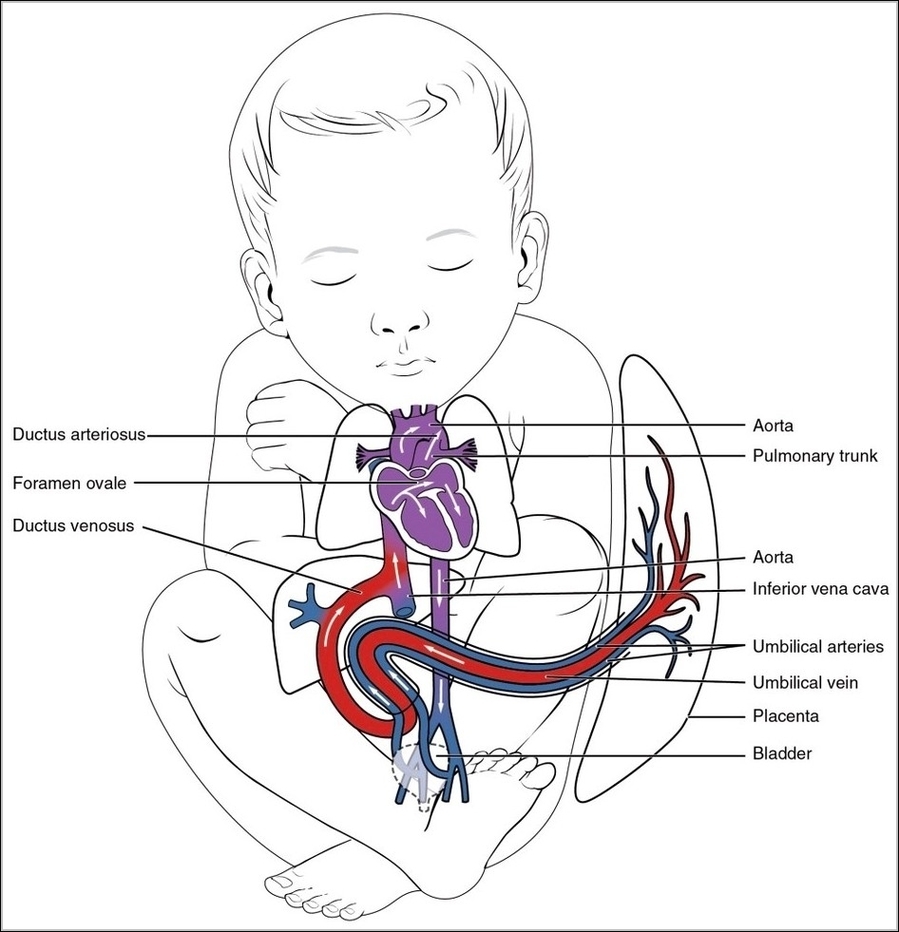
Fetal Circulation
Posted inMedical
Fetal Circulation
Post navigation
Previous Post
 Hyperbaric Chamber
Next Post
Arteries of the Brain