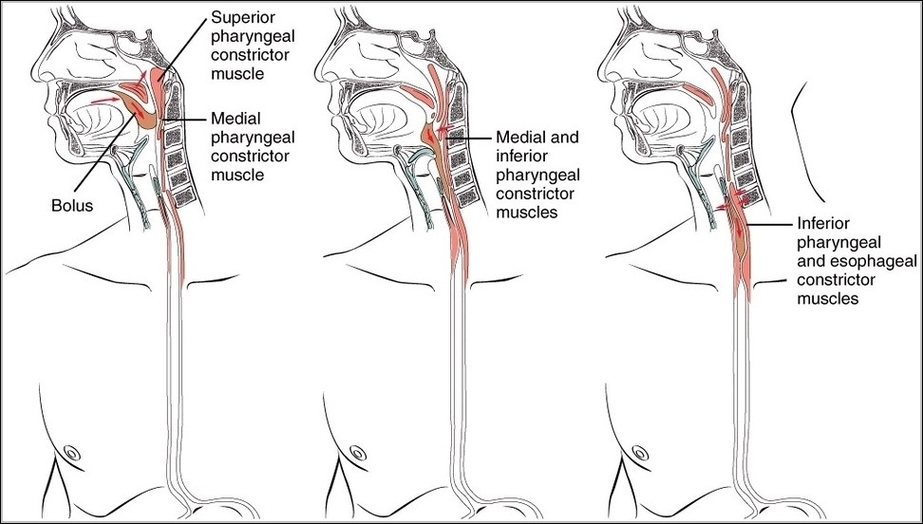
Deglutition, more commonly known as swallowing, is a remarkably coordinated process that moves food or liquid from the mouth to the stomach in three distinct phases while protecting the airway from aspiration. It begins voluntarily in the oral phase, where the tongue shapes the bolus and pushes it backward toward the pharynx, triggering the involuntary pharyngeal phase as sensory receptors signal the brainstem’s swallowing center to elevate the soft palate blocking the nose, lift the larynx, close the epiglottis over the trachea like a trapdoor, and relax the upper esophageal sphincter. Finally, the esophageal phase uses primary peristaltic wavessequential muscle contractionsto propel the bolus down the esophagus, with a secondary wave if needed, all controlled by a complex interplay of cranial nerves like the vagus and glossopharyngeal. This happens seamlessly thousands of times a day, but disruptions from neurological issues, structural problems, or aging can lead to dysphagia, making what seems simple an intricate safeguard against choking or pneumonia.
DeglutitionN
Posted inMedical
DeglutitionN
Post navigation
Previous Post
 Development of Lower Respiratory SystemN
Next Post
Cardiac ConductionN