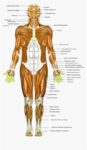
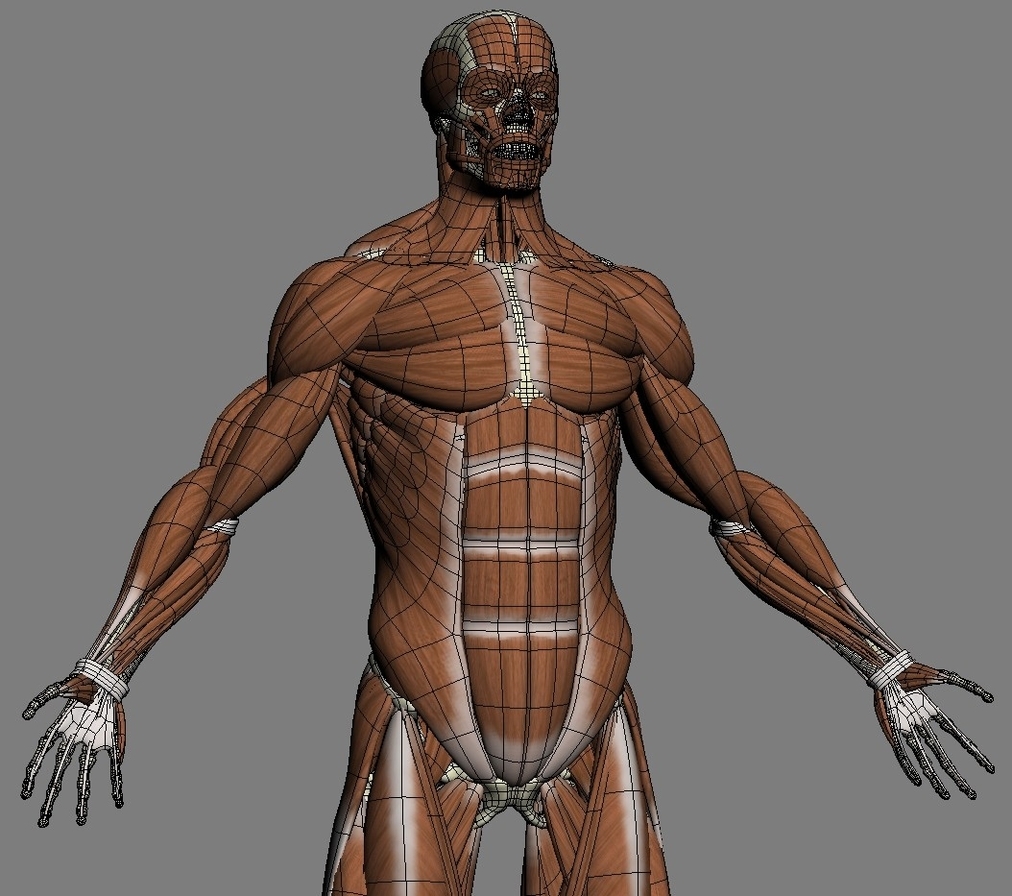
The upper body muscles are a complex network that enables a wide range of movements and provides the strength for many functional tasks. They can be broadly categorized into muscles of the shoulder region, arm, forearm, and hand.
houlder Muscles
The shoulder muscles include the deltoid, pectoralis major and minor, and the muscles of the rotator cuff (supraspinatus, infraspinatus, teres minor, and subscapularis). The deltoid is responsible for shoulder flexion, abduction, and extension. The pectoralis major and minor are involved in movements such as pushing and lifting.
The rotator cuff muscles play a crucial role in stabilizing the shoulder joint and facilitating rotational movements. Other muscles in this region include the teres major, serratus anterior, levator scapulae, rhomboid major and minor, and trapezius.
Arm Muscles
The arm muscles include the biceps brachii, triceps brachii, and brachialis. The biceps brachii is involved in elbow flexion and forearm supination, while the triceps brachii is responsible for elbow extension. The brachialis, located underneath the biceps brachii, is a powerful flexor of the elbow.
Forearm Muscles
The forearm contains a multitude of muscles that facilitate various movements of the wrist and fingers. These muscles are grouped into two main compartments: the flexors on the anterior side and the extensors on the posterior side.
The flexor group includes the pronator teres, flexor carpi radialis, palmaris longus, flexor carpi ulnaris, flexor digitorum superficialis, pronator quadratus, flexor pollicis longus, and flexor digitorum profundus.
The extensor group includes the supinator, extensor digitorum, extensor carpi ulnaris, extensor carpi radialis longus and brevis, extensor indicis proprius, extensor digiti minimi, and brachioradialis.
Hand Muscles
The muscles of the hand are divided into three groups: the thenar muscles (thumb), hypothenar muscles (little finger), and the intermediate muscles (middle of the hand). These muscles allow for the intricate movements of the fingers and thumb, enabling activities such as writing, typing, and grasping objects.
In conclusion, the muscles of the upper