The large intestine’s histology is geared toward water absorption, electrolyte balance, and waste formation, with a mucosa lacking villi but featuring deep crypts of Lieberkühn lined by columnar absorptive cells and abundant goblet cells secreting mucus for lubrication as contents thicken into feces. Enteroendocrine cells release hormones, and lymphoid nodules guard against pathogens in this bacteria-rich zone. No digestive enzymes are secreted here, but resident flora ferment fiber into short-chain fatty acids absorbed for energy. Submucosa and muscularis follow standard patterns, though the outer longitudinal muscle forms three taeniae coli that pucker the wall into haustra, with appendices epiploicae fat tags. The appendix has dense lymphoid tissue for immune function.
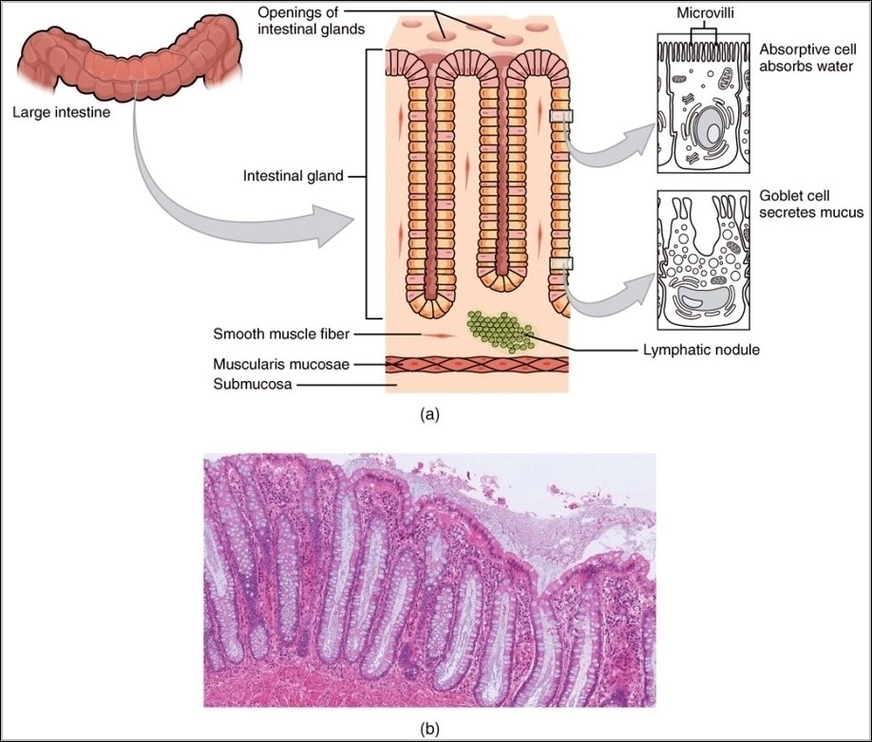
Histology of the Large IntestineN
Posted inOrgans
Histology of the Large IntestineN
Post navigation
Previous Post
 Fetal Circulatory System
Next Post
Iliac Artery Branches Chart